
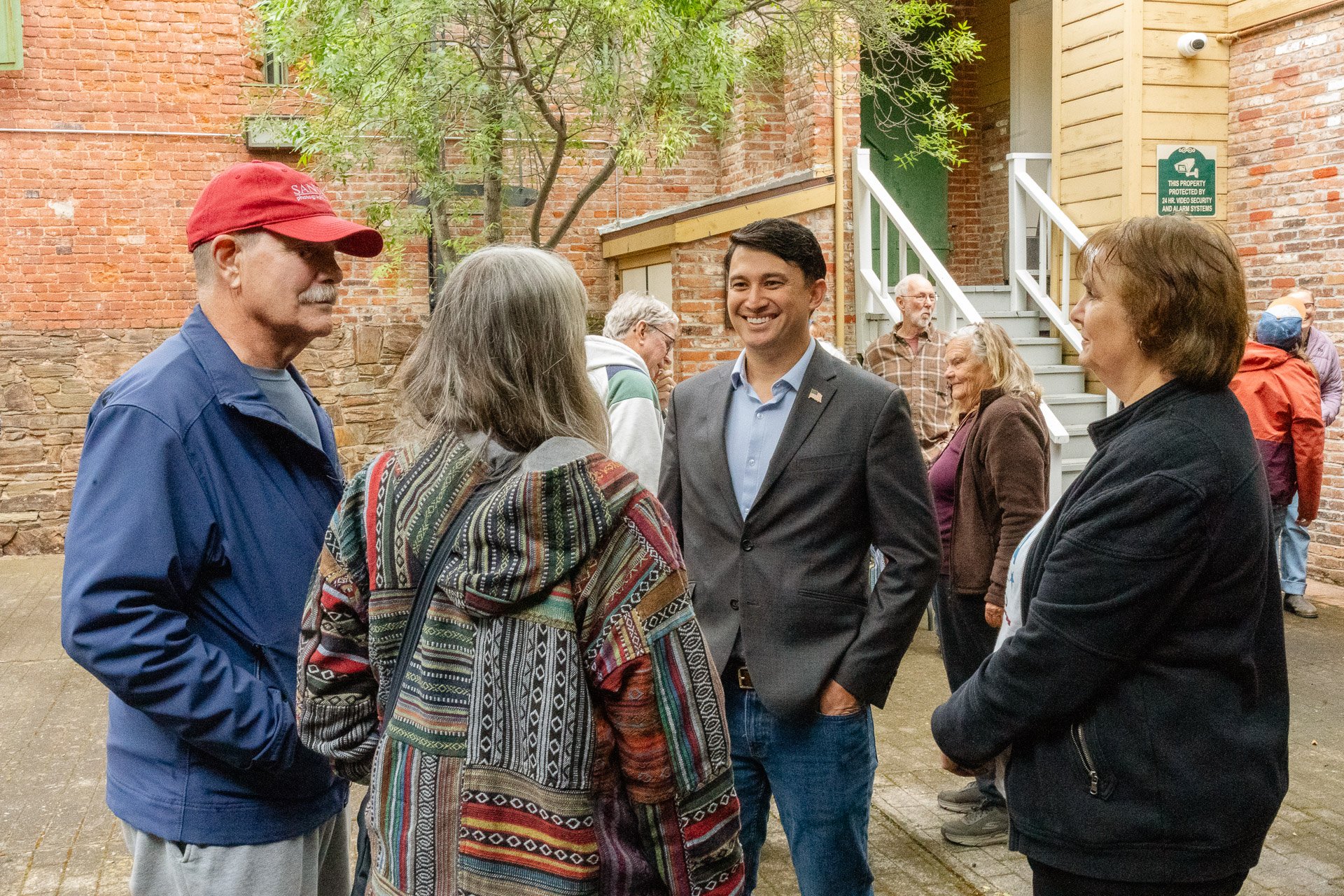
What I will fight for in Congress
If you're working hard but falling behind, you're not alone. Across CA-5, families are being squeezed by rising housing and healthcare costs, homeowners losing insurance after wildfires, farms struggling with unpredictable markets, and too few good jobs to keep the next generation here.
These challenges are the result of choices, how federal dollars are spent and which communities get left behind. For 16 years, Tom McClintock has voted against key investments in rural communities, including funding for hospitals, support for farmers, and wildfire prevention, while backing tax cuts that benefit corporations and the wealthy.
I’m running because rural California deserves a representative who will fight to lower costs, keep hospitals open, reduce wildfire risk, support our agricultural economy, and bring good jobs back to our communities.
The solutions are within reach. By making smarter investments, cutting waste, and ensuring federal resources actually reach our communities, we can strengthen CA-5 without asking more from working families.
Core Issues
-
Affordability isn’t one issue, it’s the combined pressure of housing, healthcare, energy, and everyday costs hitting families all at once.Across CA-5, people are working hard and still falling behind. In rural communities, that pressure is even greater, from rising insurance costs to longer drives for care and fewer housing options.
My focus is on lowering costs where the federal government can make a real impact and making sure those benefits actually reach our communities.
Key Priorities
Lower The Cost of Living
Target major cost drivers: housing, healthcare, and energy
Reduce out-of-pocket expenses without shifting costs elsewhere
Increase transparency where pricing is disconnected from real costs
Expand Housing Access
Support programs for rural and first-time home buyers
Reduce barriers to responsible development in smaller communities
Align infrastructure funding with housing needs
Lower Healthcare Costs
Continue efforts to reduce prescription drug prices
Strengthen rural access through clinics and telehealth
Improve accountability across the healthcare system
Support Local Economies and Agriculture
Ensure farmers have access to water, markets, and infrastructure
Strengthen local food systems to reduce cost volatility
Avoid policies that increase costs on producers or consumers
Reduce Energy Costs & Improve Reliability
Invest in grid modernization and wildfire risk reduction
Support locally driven energy solutions, including biomass
Focus on stable, predictable energy costs
Make Federal Programs Work Locally
Improve access to funding for rural communities
Cut delays and administrative barriers
Deliver disaster and economic support faster and more reliably
-
Wildfire is no longer seasonal, it’s a year-round threat across CA-5 and the West. Protecting our communities and addressing rising insurance costs requires a smarter, more coordinated approach that reduces risk and ensures resources reach the ground.
Key Priorities
Strengthen Forest Management & Fuels Reduction
Expand science-based thinning and prescribed fire
Increase staffing and funding for federal land agencies like theU.S. Forest Service, National Park Service, and Bureau of Land Management to address wildfire threats
Improve coordination between federal, state, local, and tribal partners and streamline delayed projects
Invest in Community-Level Protection
Support defensible space, home hardening, and Firewise programs
Expand access to grants for rural and high-risk communities
Prioritize projects that directly protect homes and infrastructure
Support Firefighter Readiness & Local Capacity
Provide modern training, equipment, and staffing support
Align federal resources with local and state response needs
Ensure strong healthcare and mental health support for firefighters
Improve Federal Funding & Coordination
Make funding faster, simpler, and available before fire season
Reduce agency overlap and delays
Strengthen FEMA and disaster response timelines
Protect Infrastructure
Reduce ignition risk from power lines and critical systems
Invest in grid hardening and resilience projects
Partner with state and local agencies on long-term solutions
Address Insurance & Recovery
Incentivize home hardening to lower insurance costs
Deliver faster, more reliable disaster assistance
Support long-term recovery for communities and small businesses
Local Jobs while reducing risk
Build a year-round workforce for fuel reduction and fuel breaks
Cut red tape so local contractors can compete for projects
Invest in infrastructure upgrades that prevent wildfires
-
Healthcare is about security, the ability to get care when you need it without worrying about cost, distance, or access.
In CA-5, that security isn’t guaranteed. Rural communities face long travel times, provider shortages, rising costs, and uncertainty around local hospitals. My focus is lowering costs, strengthening rural care, and putting patients first.
Key Priorities
Lower costs and improve accountability
Reduce prescription drug and out-of-pocket costs
Increase price transparency for patients
Strengthen oversight to address cost drivers
Protect rural hospitals and expand access
Stabilize rural hospitals and clinics
Expand telehealth to reduce travel barriers
Improve reimbursement in underserved areas
Incentivize providers to serve rural communities
Strengthen Coverage for Families
Protect Medicare and Medi-Cal
Reduce barriers to obtaining and keeping coverage
Improve continuity of care
Expand Mental Health & Addiction Care
Increase access in rural and underserved areas
Support treatment and recovery-focused programs
Expand both in-person and telehealth services
Support maternal and community-based care
Improve access to maternity care in rural areas
Invest in workforce development
Strengthen community-based care models
Support Veterans’ Healthcare
Improve access to VA services, especially in rural areas
Reduce delays and expand mental health support
-
CA-5 has the workforce, resources, and industries to grow, but federal policy hasn’t kept pace with how our local economy actually works. Across the district, people want good-paying jobs, the ability to stay in their communities, and an economy built on local strengths, not one-size-fits-all solutions.
My focus is on strengthening key industries, investing in workforce development, and connecting growth to real needs on the ground.
Key Priorities
Build Jobs in Wildfire Resilience
Expand fuels reduction, forest management, and restoration jobs
Train local workers for forestry, equipment, and logistics roles
Grow biomass and related industries
Support home hardening and defensible space as job creators
Strengthen Workforce Training and Local Hiring
Expand apprenticeships and job training tied to local industries
Partner with community colleges and trade programs
Prioritize local hiring in federally supported projects
Support Small Business & Local Economies
Improve access to capital and federal resources
Reduce barriers for rural businesses
Support main street and locally driven growth
Invest in Infrastructure for Growth
Improve roads, water systems, and transportation
Expand reliable rural broadband
Focus on long-term, job-generating projects
Strengthen Agriculture & Local Production
Support food processing and value-added agriculture
Improve supply chains and market access
Promote stability for producers facing rising costs
Support Tourism & Outdoor Economies
Invest in infrastructure for gateway communities
Ensure tourism growth benefits local residents
Balance economic development with land management
“We don’t need to reinvent our economy, we need to invest in what we already do well and connect it to real opportunities.”
-
Housing costs in CA-5 come down to a simple problem: we’re not building enough homes, and the ones we do build are too expensive.In rural communities, rising construction costs, workforce shortages, and the wildfire insurance crisis are making it harder to buy, rent, or stay in a home. My focus is increasing supply, lowering building costs, and making sure families aren’t priced out of their own communities.
Key Priorities
Increase housing supply
Expand proven federal programs that finance affordable housing
Encourage a mix of housing types, including entry-level and multi-family
Prioritize building in communities falling behind demand
Lower the cost of building
Address material and supply chain cost drivers
Streamline federal delays, especially in rural areas
Support modular and factory-built housing
Expand home ownership opportunities
Strengthen rural programs for first-time buyers
Support targeted financing tools and tax relief
Help seniors maintain and upgrade their homes
Build the construction workforce
Expand apprenticeship and trade programs
Partner with community colleges and local training programs
Align workforce development with housing demand
Address Insurance & Wildfire Risk
Stabilize access to home insurance in high-risk areas
Invest in home hardening and defensible space
Align housing policy with wildfire mitigation
Address homelessness
Support prevention-focused programs to keep people housed
Expand access to mental health and transitional services
Ensure rural communities receive targeted support
“If we’re serious about affordability, we have to build more housing, make it less expensive to build, and make sure families can actually afford to stay in the communities they call home.”
-
Education is the foundation of opportunity and in CA-5, our schools are central to our communities and local economy. Across the district, educators are being stretched thin as resources fail to keep up with growing student needs, especially in rural areas.
My focus is strengthening public education, supporting educators, and ensuring every student has access to the tools they need to succeed.
Key Priorities
Strengthen classrooms and student support
Increase investment in special education and student services
Reduce class sizes to improve learning and reduce burnout
Expand access to counselors, mental health, and early intervention
Support and retain educators
Address teacher shortages, especially in rural communities
Strengthen local recruitment and retention pathways
Invest in professional development and support systems
Expand Career and Technical Education (CTE)
Grow hands-on training tied to local industries
Align education with workforce needs, including trades and healthcare
Support partnerships with community colleges and employers
Ensure Stable, Equitable Funding
Strengthen programs like Title I and IDEA
Improve funding delivery to rural and underserved districts
Provide stability for long-term planning
Improve school safety and student well-being
Expand school-based mental health services
Support prevention-focused approaches to student safety
Maintain safe environments without disrupting learning
Fund Special Education
Ensure federal commitments are met
Prevent schools from diverting general funds to cover shortfalls
Deliver consistent support for students with special needs
-
Agriculture is the backbone of CA-5; supporting jobs, driving our economy, and feeding communities across the country. Farmers here already face enough uncertainty, from markets to water to labor. What they need from Washington is consistency and policies they can plan around. My approach is simple: support practical solutions and ensure federal policy works for, not against, our agricultural communities.
Key Priorities
Promote market Stability
Support reliable access to domestic and international markets
Avoid sudden policy shifts that create uncertainty
Ensure federal programs reflect California’s specialty crops
Strengthen water reliability
Improve coordination across federal, state, and local agencies
Invest in water storage, infrastructure, and drought resilience
Support balanced, science-based water management
Improve coordination across agencies
Support the agricultural workforce
Ensure a stable and reliable workforce
Recognize the role of both farmworkers and operators
Advance practical, lawful workforce solution
Improve access to federal programs
Simplify access to conservation and disaster programs
Deliver funding and assistance faster
Reduce administrative delays
Invest in rural infrastructure
Strengthen water, transportation, and energy systems
Support local supply chains and processing
Align agriculture with broader rural economic growth
-
America is a nation of laws, and a nation built by people who come here to work and contribute. Today, our immigration system is failing on both fronts. The border is inconsistent, legal pathways are backlogged, and enforcement lacks focus; creating disorder, uncertainty for employers, and unfair conditions for workers.
My approach is simple: secure the border, enforce the law, and fix the system so it is orderly, timely, and works for our economy.
Key Priorities
Secure the border and restore order
Invest in modern border security and drug detection technology
Upgrade ports of entry to manage legal crossings efficiently
Target trafficking, cartel activity, and illegal drugs
Enforce laws with focus and accountability
Prioritize removal of individuals who pose public safety risks
Improve coordination across agencies
Maintain clear standards to build public trust
Fix the legal immigration system
Expand and modernize legal pathways
Reduce backlogs for families and employers
Ensure a predictable, enforceable system
Support Agriculture & Workforce Needs
Create workable legal pathways for agricultural labor
Protect workers from exploitation
Align policy with real workforce demands in CA-5
Provide an earned, lawful path forward
Establish a structured process for long-term, law-abiding individuals
Maintain background checks and eligibility requirements
Provide certainty for Dreamers
-
LGBTQ+ rights are rooted in the fundamental American principles of freedom, dignity, and equal protection under the law. Everyone deserves to live safely, be treated fairly, and have access to the same opportunities,no matter who they are.
Key Priorities
Protect Equal Rights
Enforce civil rights laws in schools, workplaces, and public spaces
Prevent discrimination and violence
Promote equal access to opportunity
Support Youth & Community Safety
Address youth homelessness and mental health needs
Strengthen community-based support systems
Expand crisis response resources
Ensure Access to Healthcare
Protect access to medically appropriate care
Support patient decision-making with qualified providers
Expand access in rural and underserved communities
-
Strong foreign policy isn’t about rhetoric, it’s about results. As an engineer who developed defense technology to protect U.S. troops and a diplomat who negotiated on behalf of American interests, I’ve seen what works.
The goal is clear: protect American security, strengthen our economy, and prevent conflicts before they put our troops at risk.
Key Priorities
Prevent Conflict Through Diplomacy
Invest in diplomacy and development to reduce conflict risk
Ensure the U.S. has the personnel and resources to protect its interests
Maintain strong Congressional oversight
Protect Agriculture Through Trade
Expand and defend export markets for California producers
Oppose unpredictable tariffs that raise costs and hurt farmers
Enforce fair trade standards
Strengthen Alliances
Reinforce NATO and Indo-Pacific partnerships
Support targeted security assistance to deter conflict
Ensure U.S. engagement is strategic and accountable
Lead in Critical Technologies
Invest in research and development
Protect infrastructure and innovation from adversaries
Strengthen the workforce to stay globally competitive
Smart, Accountable Leadership
Prioritize prevention to avoid costly conflicts
Focus resources where they are most effective
Treat national security as both a safety and fiscal responsibility